
Customer retention starts on day one. Learn how early support helps startups turn their first buyers into loyal users, positive reviews and referrals.
In this article8Show contents
For an early-stage company, winning the first customers is only half the challenge. The bigger question is whether they stay, recommend your product and help you improve it. That is where customer retention begins, often long before a startup thinks of it as a metric.
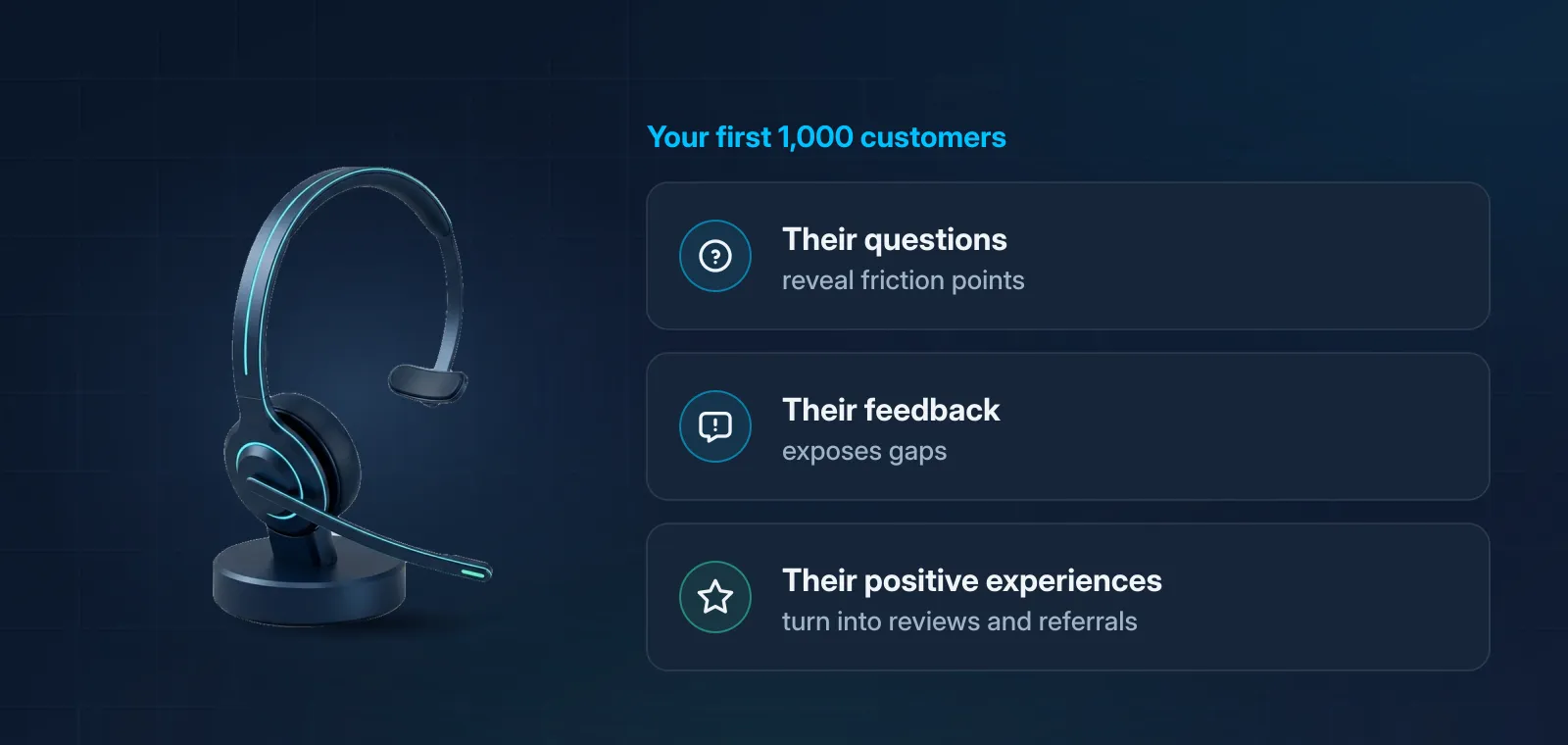
Your first 1,000 customers provide something no acquisition campaign can buy: direct, ongoing insight into what your market actually needs. Their questions reveal friction points, their feedback exposes gaps, and their positive experiences turn into reviews and referrals.
This makes customer support more than a service function. It is where loyalty is built, churn is prevented and customer insight is captured, and for a startup, getting it right early can shape the way the company grows.
Customer Acquisition Cost: Why Keeping Customers Beats Any Ad
Customer acquisition cost rarely falls as a startup grows. Advertising becomes more expensive, sales cycles get longer, and the number of tools needed to support growth keeps expanding. Losing a customer therefore means more than losing revenue: the investment made to win that customer has to be made again.
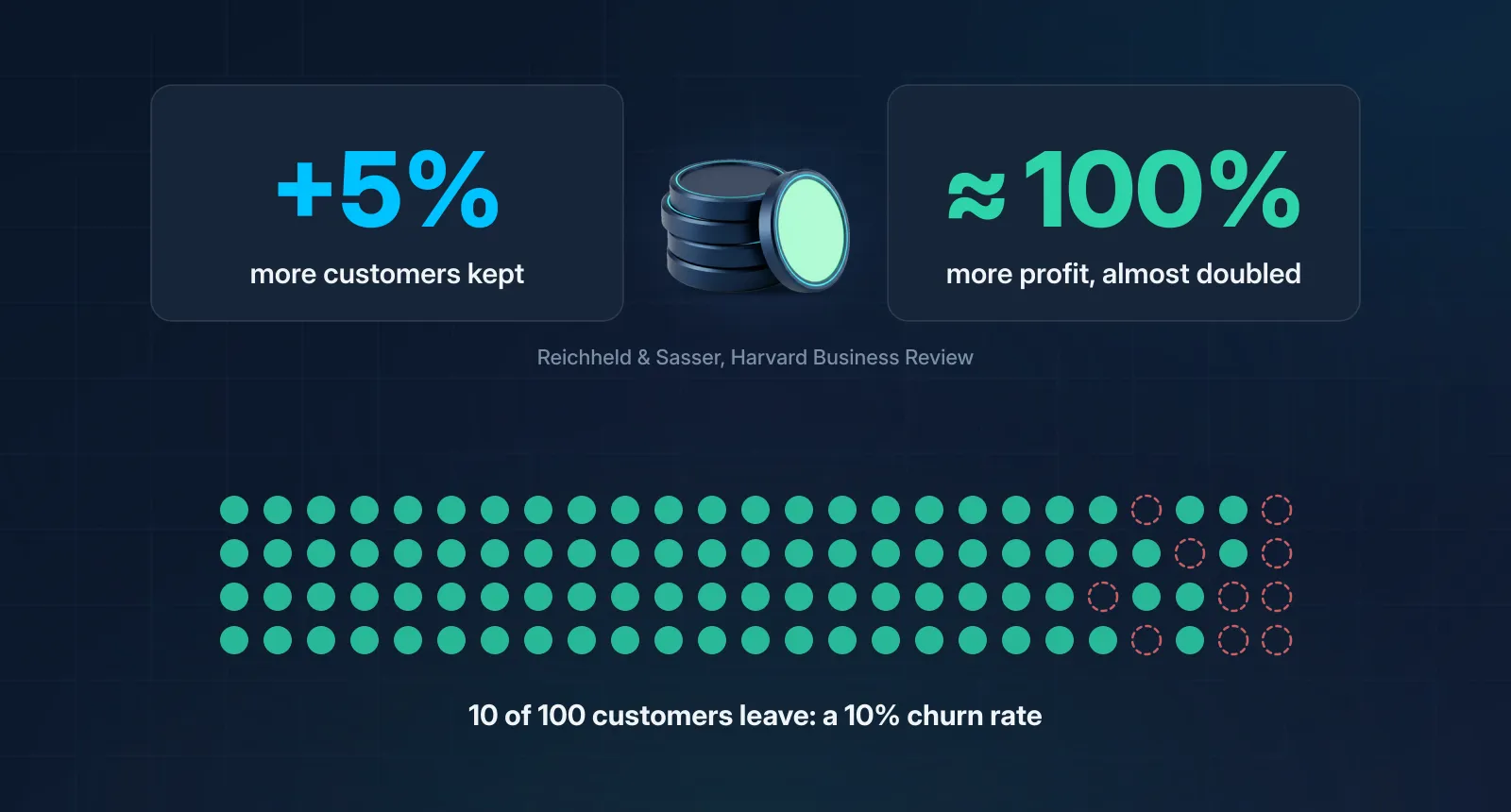
The economics of retention reflect this. Research by Frederick Reichheld and W. Earl Sasser, published in Harvard Business Review, found that companies can boost profits by almost 100% by retaining just 5% more of their customers. (Source: Bain & Company – Zero Defections: Quality Comes to Services, Harvard Business Review, 1990)
For early-stage companies, this principle is particularly relevant. Early customers may accept product gaps and bugs, but poor communication can quickly undermine their trust. Support is often where that trust is reinforced or lost.
With a small customer base, the impact is immediate. If 10 out of 100 customers leave, that is a 10% churn rate. Every individual customer represents a meaningful share of revenue, feedback and reputation.
Customer Care and Service: 3 Ways It Drives Startup Growth
Customer care and service is often treated as an operational function rather than a growth lever. For startups, that can be a costly distinction. The right support strategy can influence three areas with a direct impact on growth: reputation, retention and product development.
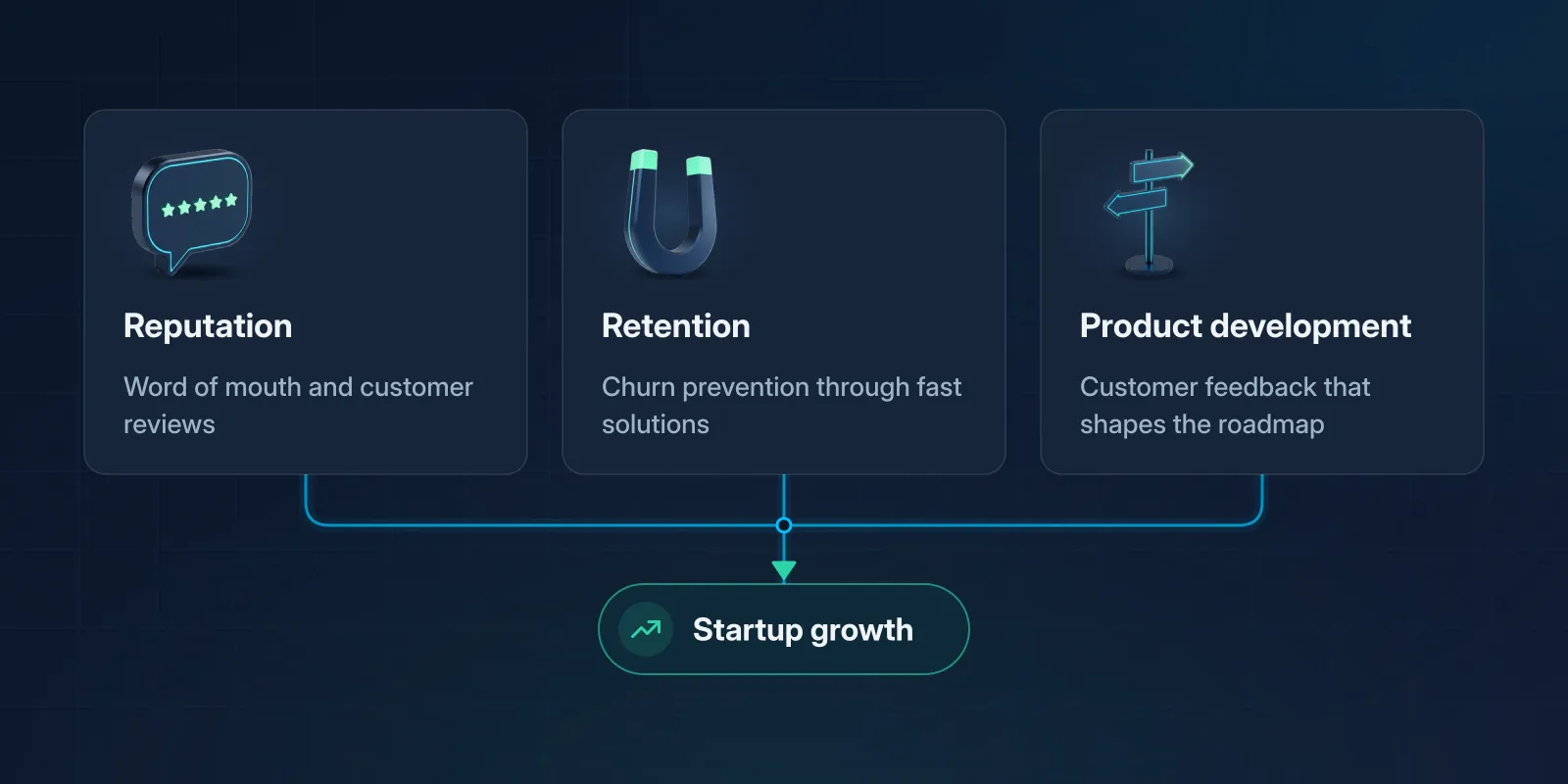
Word of Mouth and Customer Reviews
For unfamiliar brands, customer reviews and word of mouth often play a key role in the purchase decision. This is particularly relevant for young companies with a limited review history, where every new rating and every recommendation shapes how potential customers perceive the business.
Support can directly influence that perception. A delayed order may cause frustration, but proactive communication and a quick resolution can turn the same situation into a positive experience, and often into a positive review or a recommendation to others.
Timing matters, too. Asking for feedback shortly after a successful resolution gives customers a natural moment to share their experience while it is still fresh, which is when word of mouth works best.
Churn Prevention: Why Fast Solutions Keep Users
Churn is not always the result of a major failure. Often, it starts with a question that goes unanswered, an issue that stays unresolved or a user who simply cannot get help in time. In SaaS, this is especially visible in the first days and weeks, when new users decide whether the product is worth their time.
That is why speed is at the core of churn prevention. The faster a problem is solved, the less room there is for frustration to turn into disengagement. Users who get quick, effective answers are far more likely to stay, while slow or incomplete responses often lead to quiet cancellations rather than complaints.
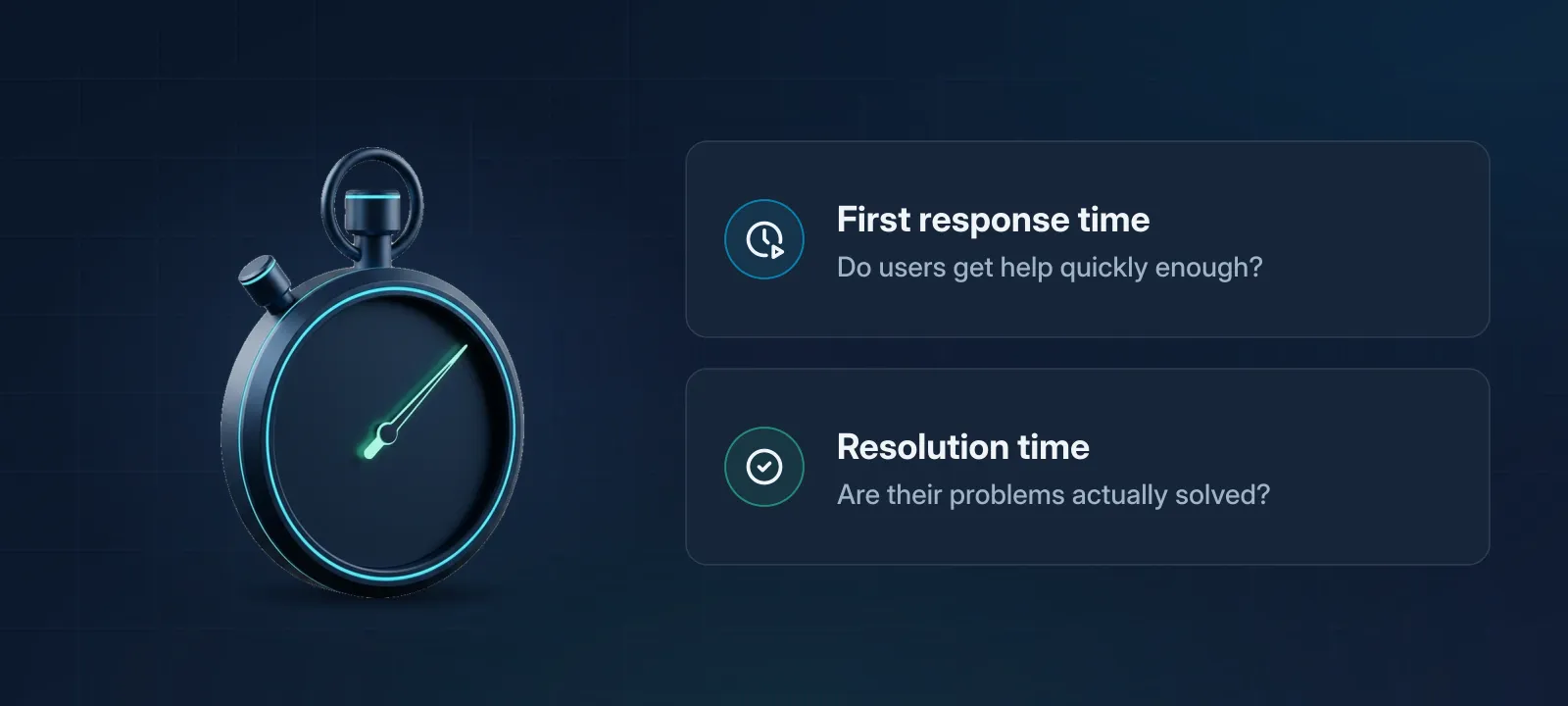
You do not need a large support operation to keep track of this. Two metrics provide a useful starting point: first response time and resolution time. Together, they show whether users receive help quickly enough and whether their problems are actually being solved.
Customer Feedback That Shapes Your Roadmap
Some of the clearest customer feedback is already sitting in your support inbox. The questions customers repeatedly ask can reveal friction in your UX. Recurring complaints can point to missing features or processes that are not working. Feature requests can tell you what customers want next, and what they may be willing to pay for.
The key is to turn those conversations into input for your roadmap. Tag support tickets by topic, track recurring issues and give your team a short monthly overview of what customers are asking, reporting and requesting. This creates a simple “voice of the customer” feedback loop without adding another complicated system.
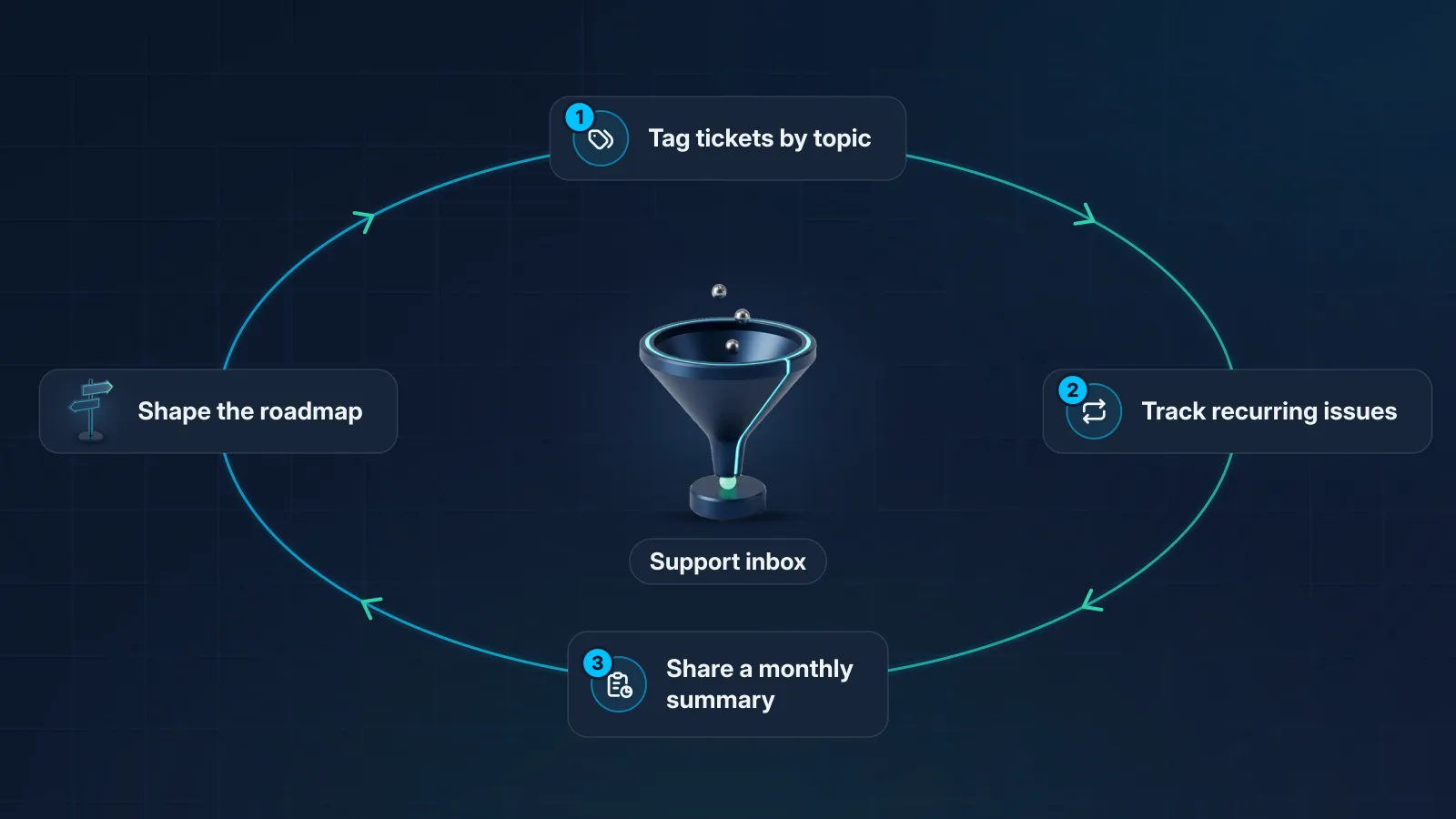
That loop becomes even more valuable as support volumes increase. With the right process in place, your support operation does more than resolve issues. It continuously feeds customer insight into product priorities and helps you move closer to product-market fit.
Brand Loyalty in the AI Era: What Competitors Can’t Copy
AI has made it easier than ever to build, improve and replicate products. Development cycles are shorter, new features reach the market faster, and what gives one company an advantage today can become standard functionality tomorrow.
Customer relationships are much harder to copy, and that is where brand loyalty is built. A startup may not be able to compete with an established player on price, brand awareness or marketing budget, but it can compete on how quickly it responds, how well it understands its customers and how human each interaction feels. Support plays a central role in shaping that experience.
According to Salesforce, 80% of customers consider the experience a company provides to be as important as its products and services. (Source: Salesforce – State of the Connected Customer, 6th edition)
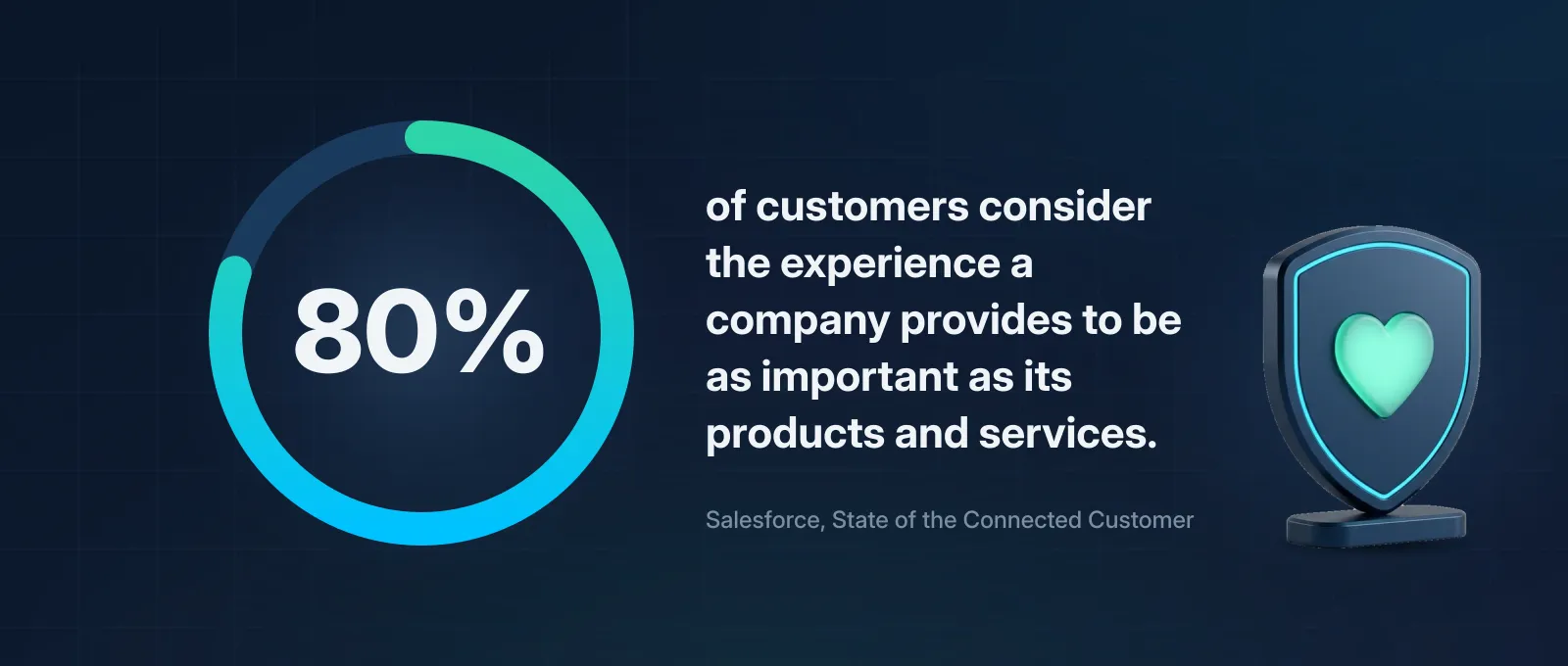
For startups, this makes customer support more than a cost or an operational necessity. It becomes one of the reasons customers choose to stay, and one advantage competitors cannot simply replicate. As the customer base grows, the question becomes who will deliver that experience consistently.
Founder Mode Has Limits: The Hidden Cost of Doing Support Yourself
Founder mode, the idea that founders should stay close to the details of their company, is often confused with doing everything themselves. Support is a good example of where founder mode reaches its limits.
Reading support tickets can be valuable. It keeps founders close to customers, reveals recurring problems and shows where the product needs work. Answering every ticket yourself is different, and this is where the hidden costs begin. Ten hours a week in the inbox means ten hours less for product, sales or fundraising. Coverage becomes inconsistent during meetings, travel and funding rounds, evenings and weekends go unanswered, and the quality of replies depends on who happens to be available.

It also creates a knowledge bottleneck. Customer context stays in one person’s head, while the workload keeps growing until support becomes another source of burnout.
The cheapest support is not the support you handle yourself. It is the support that prevents customers from leaving.
A better setup keeps founders close without putting them on shift. They can review support summaries, join important customer conversations and stay informed about recurring issues, while a dedicated team handles the day-to-day interactions.
Business Growth Doesn’t Wait: Why Support Starts on Day One
Many founders wait for a clear signal before investing in support. The problem is that by the time those signals appear, customers have already felt the impact, and some of them may have left or shared their experience publicly.
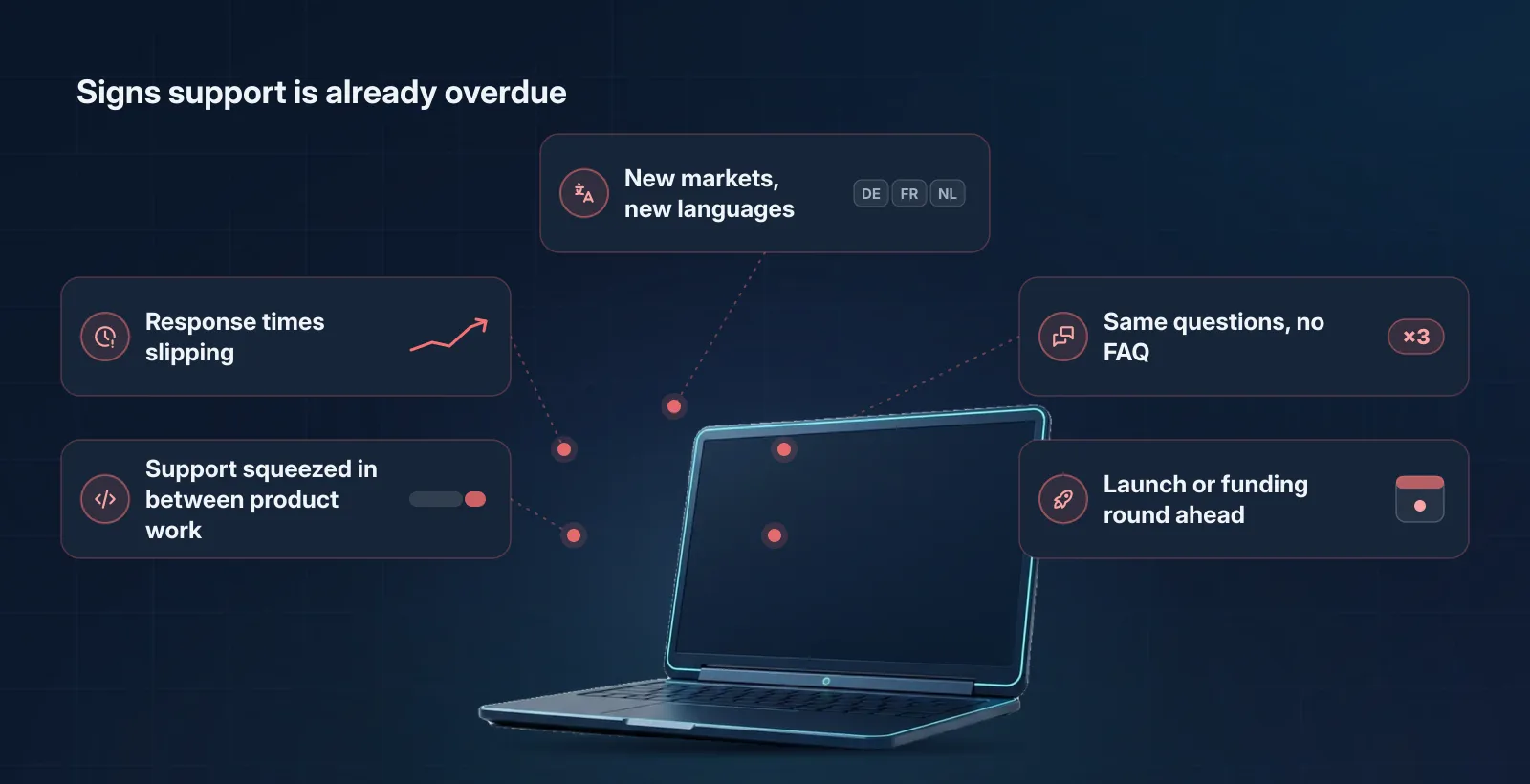
If any of the following sounds familiar, support is not something to plan for later. It is already overdue:
- Response times are becoming harder to maintain
- Support is handled alongside product, sales or development work
- Recurring questions are not documented in an FAQ
- Upcoming launches or funding rounds are likely to increase demand
- New markets or languages require additional coverage
Starting early does not mean building a large operation ahead of demand. It means creating a support structure that can expand when needed, with defined coverage, a consistent tone of voice, documented answers and flexible capacity.
Business growth rarely waits for the right moment, and support should not either. With the structure in place before support becomes a constraint, the company has room to grow while every customer continues to receive the same level of service.
When to Outsource Customer Support? Earlier Than You Think
There is no universal date on the calendar that tells you when to outsource. There are, however, three questions that make the decision clearer:
- Do you have the time to build and train a support team yourself?
- Can your current setup cover every channel, language and time zone your customers expect?
- Will it still hold up when volumes double after a launch or a successful campaign?
If the honest answer to any of these is no, outsourcing is worth considering now rather than later. Here is how the most common options compare.
| In-house | Freelancers | Outsourcing | |
|---|---|---|---|
| Cost structure | Salaries, recruiting, equipment, management time | Hourly or per-task rates, low fixed costs | Monthly or per-agent pricing, no hiring costs |
| Time to get started | Weeks to months of hiring and training | Fast, but depends on availability | Usually a few weeks, with an existing team |
| Scalability | Slow, every new person must be hired | Limited, depends on individuals | Capacity adjusted to volumes |
| Quality control and training | Fully in your hands, but takes time | Hard to keep consistent across people | Defined processes, team leads and quality monitoring |
| Languages | Limited to the people you hire | Possible, but hard to coordinate | Several languages from one partner |
| Coverage | Gaps during holidays and sick leave | Depends on each freelancer | Continuity through a team |
| Data security | Your responsibility | Varies, often hard to verify | Certified processes possible, e.g. ISO 27001 and GDPR |
Languages often tip the balance. As soon as a startup sells in more than one country, customers expect help in their own language, and research supports that expectation: CSA Research found that 76% of consumers prefer to buy products with information in their native language. (Source: CSA Research, Can’t Read, Won’t Buy – B2C, 2020) Building that coverage with your own hires takes time few early teams have.
Some companies are better served in-house, for example when the product is highly specialized or volumes are very low. For the majority, customer support outsourcing for startups is the more practical first step.
FAQ: Startup Tips on Keeping Customers
What is meant by customer retention?
Customer retention describes a company’s ability to keep its existing customers over a certain period of time. For startups, it shows whether early customers continue using the product, buy again and stay loyal, rather than leaving after their first purchase or trial.
How do you calculate customer retention rate?
Here is the most common way to calculate customer retention rate: take the number of customers at the end of a period, subtract the new customers you gained during that period, divide by the number you started with and multiply by 100. For example, if you start the month with 200 customers, win 50 new ones and end up with 220, your customer retention rate is ((220 − 50) ÷ 200) × 100 = 85%.
Why is customer service important for startups?
For a young company, customer service shapes the first impression, influences early reviews and decides whether new users stay. It is also one of the best sources of product feedback, which makes it valuable well beyond solving individual problems.
How do you outsource customer service for small business and startup teams?
Start by defining which tasks you want to hand over, which channels and languages you need and what response times you expect. Then compare providers on experience, data security, flexibility and how well they adapt to your tools and tone of voice. Many providers also allow a small start before scaling up.
The Bottom Line: Customer Focus Keeps Startups Growing
Growth is often measured by how many new customers a startup can win. Yet the companies that build something lasting tend to measure something else as well: how many of those customers they manage to keep. In the early stages, that number says a lot about the health of the business.
Every support conversation is a small test of the promise a startup has made. When customers get help quickly, feel understood and see their input reflected in the product, trust grows. Over time, that trust becomes the foundation for repeat purchases, recommendations and a reputation that marketing alone cannot create.
Customer focus is what connects all of this. It is less about a single tool or team and more about a mindset: treating every customer interaction as part of the growth strategy, not as a task to be handled when there is time.
For a startup, the question is not whether to invest in support, but how to set it up in a way that can keep pace with growth. If you are ready to explore what that could look like, take a look at how we support startups.
Worth a read? Pass it on.